This is a "holding pile," where I collect compost-able items and then stir it once every couple of weeks...if I can. The ground and top of the pile has been frozen. Warm temperatures are needed for active composting, but don't let the cold stop you from gathering materials for your piles. The gray material is dryer lint, and yes, you can compost that.
Showing posts with label composting. Show all posts
Wednesday, January 15, 2014
Monday, October 14, 2013
Composting Surprise
I started composting about a year ago. I put together two bins. One was "hot" and one was a holding bin I planned to start cooking when the other bin was just about done. Above is a photo of the holding bin. The surprise is that the holding bin is just about done - without me trying to get it "cook," by adding nitrogen and stirring and keeping moist. That plastic cup says "compostable" - but as you can see, it hasn't. I'll bury it and try again.
Here is finished compost from the pile I thought was the only one really "cooking."
Now, it starts all over again.
Sunday, November 4, 2012
Compost is Cooking
Outdoor temperature was 52 degrees. 106 shows that the materials are being eaten by critters, bacteria and fungi - which is exactly what has to happen to end up with rich gardening material. Since we're headed into the cold season, I don't expect this pile to be "done" until spring.
Labels:
Boise,
compost,
composting,
garden,
gardening
Saturday, October 27, 2012
Time for the Weekly Compost Stirring
Mulched leaves, grass clippings, fallen pears, coffee grounds and kitchen scraps are in the recipe so far. I'm stirring and keeping it moist. I'll add more leaves and "greens" before sprinkling with nitrogen and monitoring the "cooking." The mixture needs to get close to the 140 degree ranges. Will that happen even in winter? We'll see.
Labels:
Boise,
compost,
composting,
gardening,
humus
Monday, October 8, 2012
Learning to Compost
The composting experimentation begins. I'm taking the University of Idaho Master Gardener class, and the instructor said, "If you aren't composting, you should be." Autumn is an excellent time to start because there are a lot of ingredients available.
I purchased two rolls of hardware cloth (rabbit fence would work, too) - 36 inches by 10 feet. They were shaped into two "bins," secured at the seam with wire, and secured to the ground with landscape staples.
I'm dumping in frozen tomatoes and mint clippings in the photo. I'll also add kitchen scraps, lawn clippings and mulched leaves - when the trees shed a bit later. The "greens" and the "browns" need to be about 50-50. Stir well and moisten, and add nitrogen. That can be done with manure, but I happen to have some nitrogen fertilizer in the garage. Regular stirring and moisture and, hopefully, the compost will be done by spring planting time.
Last year, my lawn guy dumped mulched leaves directly into my garden beds. He thought that would be excellent for soil health. Well....yes and no. The leaves didn't decompose enough, so they "stole" nitrogen (used by bacteria during composting) from my plants during the growing season. It was most noticeable in my tomatoes. Even though I fertilized, I couldn't overcome the demand of the decaying leaves.
I purchased two rolls of hardware cloth (rabbit fence would work, too) - 36 inches by 10 feet. They were shaped into two "bins," secured at the seam with wire, and secured to the ground with landscape staples.
I'm dumping in frozen tomatoes and mint clippings in the photo. I'll also add kitchen scraps, lawn clippings and mulched leaves - when the trees shed a bit later. The "greens" and the "browns" need to be about 50-50. Stir well and moisten, and add nitrogen. That can be done with manure, but I happen to have some nitrogen fertilizer in the garage. Regular stirring and moisture and, hopefully, the compost will be done by spring planting time.
Last year, my lawn guy dumped mulched leaves directly into my garden beds. He thought that would be excellent for soil health. Well....yes and no. The leaves didn't decompose enough, so they "stole" nitrogen (used by bacteria during composting) from my plants during the growing season. It was most noticeable in my tomatoes. Even though I fertilized, I couldn't overcome the demand of the decaying leaves.
Labels:
Boise,
composting,
garden,
gardening
Wednesday, March 28, 2012
Leaf Composting
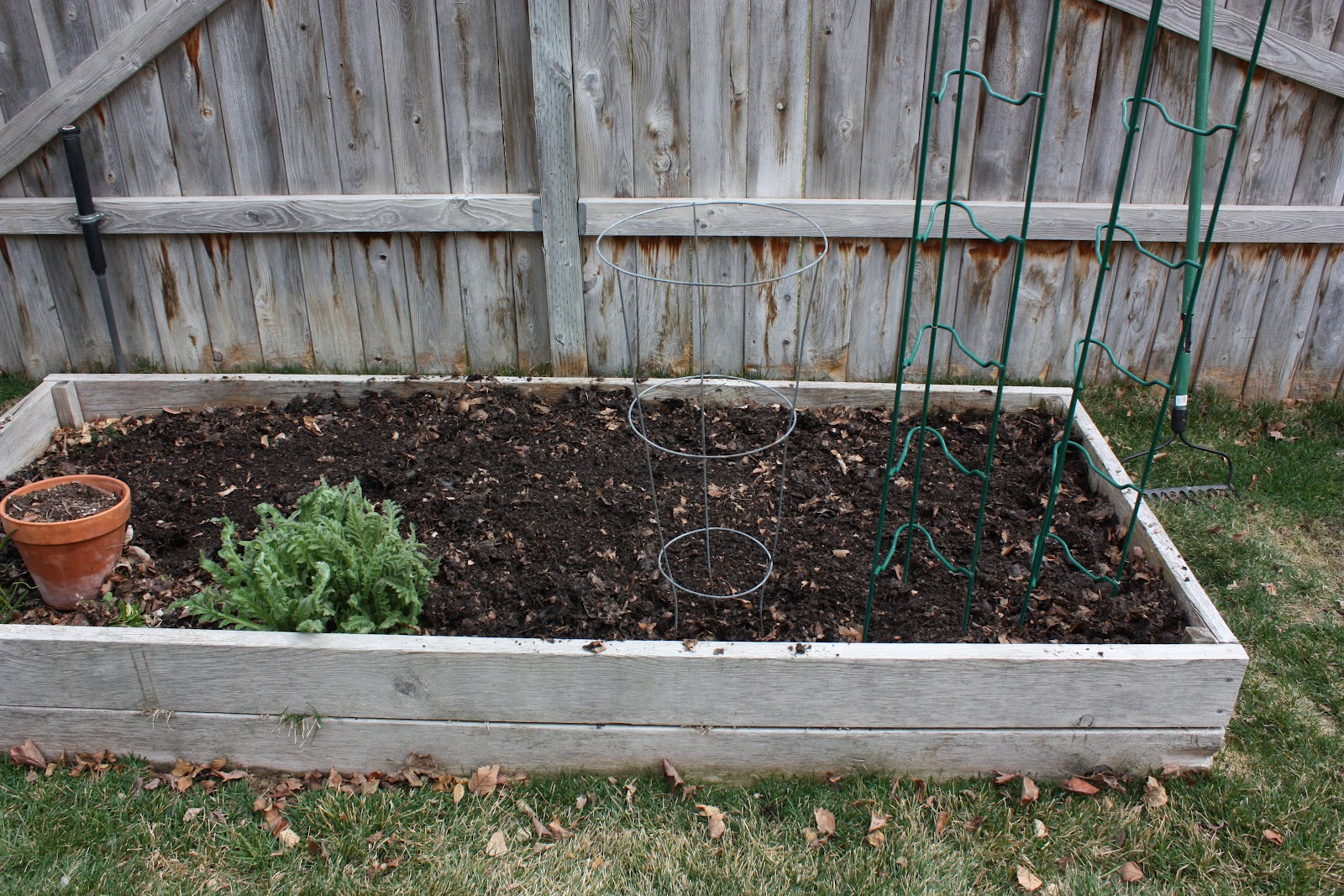
It was time last weekend to turn over the leaf compost. Autumn leaves were shredded with the mower and heaped on the garden beds. I worked them into the soil. Next, I'll test the soil pH and fertility levels and make adjustments over the next few weeks. Potatoes, snow peas and beets will be the first plantings.

Labels:
Boise,
composting,
garden beds,
gardening,
leaves
Subscribe to:
Posts (Atom)